Is a PS4 Controller a Gamepad?
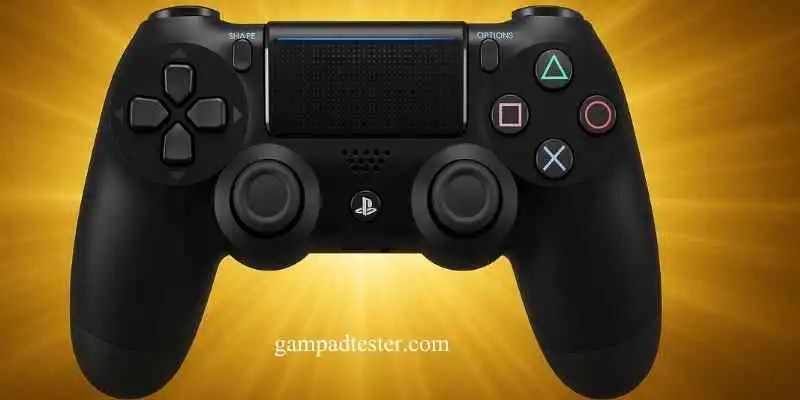
When people talk about the PS4 controller, they’re really referring to the evolution of the DualShock legacy — a controller that redefined what a gamepad could be. I still remember holding my first Analog Controller, feeling that unique vibration feedback pulsing through my hands as I moved through a game. Inside the handles, two vibration motors worked in tandem—the left one slightly larger and stronger than the right—creating a truly immersive connection between the player and the gameplay. Unlike the Rumble Pak 64 Nintendo, which ran on a battery, the DualShock remained corded and powered directly by the PlayStation, ensuring smoother input and consistent vibration levels.
The Japanese Dual Analog Controller came first, but its discontinuation opened the door for the DualShock’s enduring success. Its layout became legendary—featuring a directional pad, Start and Select buttons, and the signature four face buttons marked with geometric icons: the green triangle, red circle, blue cross, and pink square.
These weren’t just random; Teiyu Goto, the designer, assigned each symbol meaning rooted in Japanese culture—”yes” and “no” for the circle and cross, a view for the triangle, and a sheet of paper for the square to symbolize menus. That thoughtful design built a trademark for the PlayStation brand and changed how games communicated with players worldwide.
What fascinates me most is how the DualShock’s analog sticks evolved with 8-bit precision, offering both analog and digital modes through a dedicated Analog button. That small red light signaled whether you were navigating in analog or digital mode—a clever solution for control issues in older games.
The textured rubber grips, convex thumb caps, and smooth plastic contours gave the controller a tactile comfort that the PS4 gamepad still carries today. Every detail—the grip design, L2/R2 triggers, and recessed analog sticks—was crafted with intent, preventing accidental inputs and ensuring precise control in games like Tekken, Crash Bandicoot, and Gran Turismo.
Later versions, such as the PSone controller and PS2 DualShock, refined this DNA—maintaining backward compatibility, protocol consistency, and a recognizable shape. When you pick up a PS4 controller, you’re not just holding a gamepad; you’re holding decades of design evolution, technological precision, and PlayStation heritage that began with the humble DualShock Controller and continues to define interactive gaming experiences today.
DualShock 2
When the DualShock 2 Analog Controller (SCPH-10010, SCPH-97026) arrived with the PlayStation 2, it marked a quiet yet defining evolution. I can still picture holding it for the first time—the smooth black cord, the more responsive analog sticks, and the gleaming blue logo that crowned the top.
It looked almost identical to the previous DualShock, but there was something more refined in its design. The controller felt lighter, the buttons more responsive, and even the subtle cosmetic changes—like the reshaped connector and fewer screws—hinted at precision engineering rather than a full overhaul. The standard controller remained black, although later color variants, such as satin silver, ceramic white, and candy pink, added a touch of personalization that gamers loved.
Inside, the DualShock 2 had more than just aesthetic upgrades. Nearly all buttons became pressure-sensitive, capable of detecting 256 levels of pressure, making gameplay feel more natural. The analog mode, start, select, L3, and R3 retained their distinct tactile feedback, while the stiffer analog sticks gave better control precision.
Whether navigating an arcade cabinet like Namco’s CyberLead 2 or playing Tekken 5 or Winning Eleven Arcade Championship 2012, the experience was intuitive and immersive. Even coin-operated setups began incorporating DualShock inputs and memory card slots, a testament to the growing impact of the DualShock on gaming hardware.
Backward and forward compatibility also became defining traits. The original PlayStation worked seamlessly with the DualShock 2, while the PlayStation 3 could recognize it through USB ports and third-party peripherals. Yet, not every title was adapted — games requiring Sixaxis functionality, like Heavy Rain, couldn’t rely on it fully. Still, the DualShock 2 carried the torch of analog innovation, standing as the refined bridge between the tactile legacy of the original and the modern precision of today’s gamepads.
DualShock 3
By the time Sony Computer Entertainment released the DualShock 3, gaming had already evolved into something more sensory and precise. I remember unboxing mine, noticing how it looked familiar yet felt different — a blend of the classic DualShock 2 design but enhanced for the Seventh Generation. The wireless controller (SCPH-98050/CECHZC2) introduced a powerful mix of motion sensing, 3-axis control, and 6 degrees of freedom, letting players feel every nuance of gameplay.
Its analog sticks had 10-bit precision, while the L2 and R2 triggers offered that tactile depth that changed how shooters and racing titles felt in hand. The pressure-sensitive buttons—Triangle, Circle, Cross, and Square—alongside L1, R1, and the directional buttons, gave unmatched control that still defines how gamepads are designed today.
The technical evolution was striking: USB and Bluetooth connectivity, Lithium-ion battery (3.7V 300mA, 5.0V 500mA), and a perfectly balanced weight of 192g (6.77oz) made it both responsive and durable. The DualShock 3 succeeded the Sixaxis, integrating haptic feedback and vibration—features absent in its predecessor due to the Immersion patent lawsuit that was finally settled in March 2007.
This victory enabled Sony to reintroduce the signature rumble effect while maintaining motion-sensing functionality. It also meant gamers could connect through a USB mini-B port, charge via a cable, and use it across devices like PS3, PSP Go, and PlayStation TV.
The internal Li-ion battery (570mAh) promised nearly 30 hours of continuous gaming, which for many of us meant fewer interruptions and more seamless play sessions.
Visually, the DualShock 3 was stunning. It came in elegant finishes like charcoal black, satin silver, ceramic white, metallic blue, deep red, and limited-edition shades such as crimson red, cosmic blue, gunmetal grey, and even Metallic Gold.
Some versions, such as God of War: Ascension and the Crystal model in Japan, became collectors’ favorites. Its refined rigidity, improved trigger brackets, and subtle indicator lights on the board showed how carefully Sony listened to players. To this day, I consider the DualShock 3 the perfect bridge between the analog heritage of previous controllers and the sleek precision of modern PS4 controllers, proving that small innovations can redefine the feel of an entire generation of gaming.
Conclusion
From the early days of the Analog Controller to the refined precision of the DualShock 4, the PlayStation controller’s journey reflects the evolution of gaming itself. Each generation built upon the last—perfecting comfort, responsiveness, and immersion. What began as simple vibration feedback transformed into a deeply intuitive tool that connects players to their games in ways once unimaginable. The PS4 controller isn’t just hardware—it’s the culmination of decades of innovation, passion, and the timeless pursuit of a better gaming experience.